
Why Medical Device EMC Testing May Need to Go Beyond the Standard
18 Sep 2026
Ad Hoc Testing Can Help Address Interference that Consensus Standards May Not Fully Cover
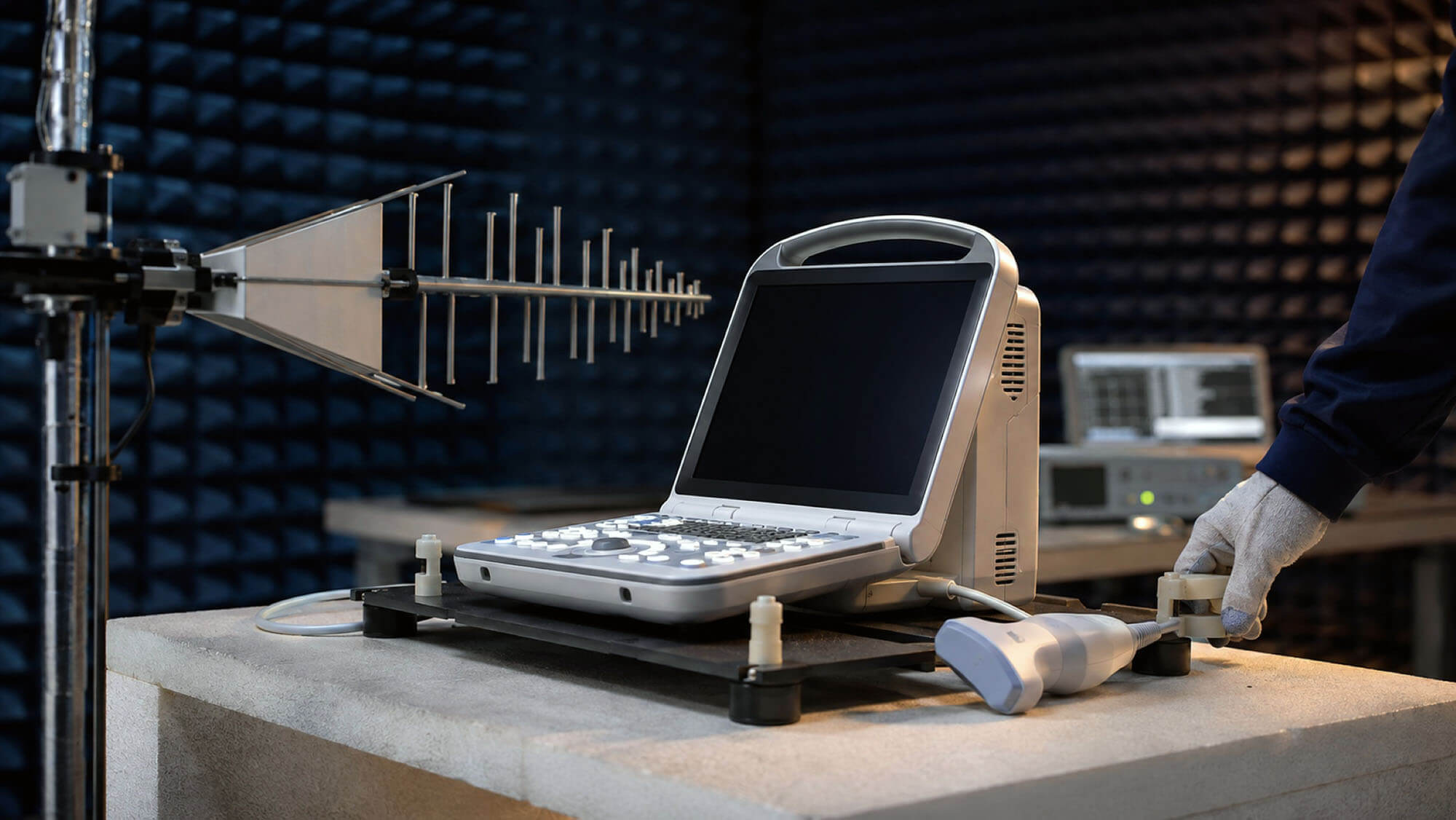
Medical device manufacturers have long relied on IEC 60601-1-2 to evaluate electromagnetic compatibility (EMC). The standard provides an essential framework for determining whether medical electrical equipment can operate safely around electromagnetic disturbances and avoid creating unacceptable interference of its own.
But the electromagnetic environment continues to change. New cellular frequencies, wireless charging systems and other emitters are appearing faster than consensus standards can be updated. Meanwhile, medical devices are increasingly used outside controlled clinical settings, placing them near technologies that may not have been common when the applicable EMC requirements were developed.
Why IEC 60601-1-2 May Not Tell the Whole Story
Compliance with IEC 60601-1-2 remains a fundamental part of the EMC evaluation for many medical devices. Ad hoc testing does not replace the standard. It supplements standard testing when a device may encounter interference sources that are not adequately represented by the published test methods.
The U.S. Food and Drug Administration’s (FDA) 2022 guidance on electromagnetic compatibility for medical devices calls attention to interference from common emitters. Manufacturers submitting a 510(k), premarket approval application or other submission may be expected to show that they considered the electromagnetic disturbances their device could encounter during actual use.
Common emitters can include cellular 5G technologies, radio-frequency identification systems, near-field communication, electronic article surveillance systems, metal detectors and wireless power transfer equipment. The appropriate considerations depend on the device, its intended use, and the environments in which it will operate.
What Ad Hoc EMC Testing Means
Testing conducted to a consensus standard follows established methods, test levels and performance criteria. Ad hoc testing addresses a potential electromagnetic disturbance for which no directly applicable consensus test method exists.
The challenge is determining how to reproduce real-world interference in a technically defensible way. Manufacturers cannot simply select a convenient frequency and exposure level. The test should be supported by engineering analysis and reliable information about the emitter being simulated.
For cellular interference, for example, publicly available Federal Communications Commission (FCC) information can help identify frequency bands allocated for use. Other technical resources, including IEEE publications, may provide information about signal characteristics and modulation. Together, those sources can support decisions about the frequencies, waveforms, field strengths and test configurations used in an ad hoc evaluation.
In some cases, manufacturers may be able to adapt a method from another standard. Equipment intended for an operating room could be exposed to interference from high-frequency surgical equipment. Even if the product is not covered by a particular standard addressing that interference, an existing method from a related medical device standard may provide a useful technical basis for testing.
Begin with the Intended Use Environment
The environments identified for the device are central to deciding which disturbances should be evaluated. A product used only in a controlled professional healthcare setting will not necessarily face the same emitters as a wearable device used throughout a patient’s daily life.
A wearable product might pass through airport security systems, retail store entrances and metal detectors. It may be placed near smartphones, wireless charging pads or other consumer electronics. A home healthcare device could be exposed to numerous wireless products that would be less common or more tightly controlled in a hospital.
Professional healthcare environments present their own challenges. Patient monitors, nurse call equipment and other devices may operate near digital television signals, LTE or 5G transmissions, RFID systems and other medical equipment. Devices used in operating rooms may also need to account for high-frequency surgical generators.
Some products are intended for both professional and home use. In those cases, manufacturers should identify the potential interference sources in every claimed environment rather than assuming that testing for one setting will cover the others.
Connect EMC Testing to Risk Management
The risk management file provides the logical starting point for this analysis. Manufacturers should identify where the device will be used, the electromagnetic emitters reasonably expected in each environment and how interference could affect safety, essential performance or other clinically significant functions.
That evaluation can then be carried into the EMC test plan. Each test should have a clear rationale connecting the identified interference source to the device’s intended use and associated risks. The plan should also establish how the device will be operated and monitored during exposure, including the functions and performance criteria that must be maintained.
This process helps demonstrate that the manufacturer considered how the product will behave outside the laboratory. It also gives regulators a clearer explanation of why particular tests were selected and how the results support the device’s safety and performance.
Use Established Methods when Available
Ad hoc testing is appropriate when no suitable consensus method exists, but manufacturers should use an established method when one is available. RFID provides a helpful example.
RFID technology is increasingly common in healthcare environments and may also be incorporated into medical equipment to identify accessories. AIM Standard 7351731 provides a comprehensive method for evaluating medical electrical equipment immunity to emissions from RFID readers. Because an established method exists, testing to that standard would not generally be considered ad hoc.
Look Closely at Wireless Power Transfer
Wireless power transfer has become another important consideration as charging pads, battery packs and charging surfaces appear in homes, vehicles and public spaces. Testing should account for more than the charging mode alone.
Wireless chargers may also operate in a foreign-object or metal-detection mode, which helps prevent charging when an unsuitable object is present. They may use a ping mode to detect and communicate with a compatible device before charging begins. The electromagnetic field levels produced during these modes can vary significantly.
Evaluating only the active charging mode could therefore overlook a relevant exposure. Testing the charger in its different operating modes can provide a more complete understanding of how a nearby medical device may respond.
Plan Before Submitting to the FDA
Manufacturers can wait for regulatory feedback before conducting supplemental EMC testing, but that approach can add time if the FDA requests additional information. A more proactive strategy is to evaluate common emitters during product development and include justified supplemental testing in the initial submission when appropriate.
EMC compliance is no longer just a matter of completing a standard test program. Manufacturers need to consider where the device will be used, which technologies it may encounter and how interference could affect its operation. A risk-based approach to ad hoc testing can help close the gap between published standards and the electromagnetic conditions medical devices face in the real world.

You may be interested in...

Create an EMC Test Plan and Ad Hoc EMC Webinar
Intertek’s EMC experts explain how to develop a robust EMC test plan aligned with IEC 60601-1-2, FDA expectations, and evolving ad hoc requirements.
IEC 60601-1-2: Medical Device EMC Testing
IEC 60601-1-2 Electromagnetic Compatibility (EMC) Testing for Medical Devices including IEC 60601-1-2 4th Edition Amendment 2.